If you’ve ever been stranded with a car that won’t start, you know the frustration of not knowing whether the problem lies with the battery, the alternator, or something else entirely. A reliable battery tester can take a lot of that guesswork out of the equation — and that’s exactly the kind of tool the FOXWELL BT705 is designed to be. This article walks through what this device is, how it works, who might find it useful, and what to keep in mind before adding it to your toolkit.
What Is the FOXWELL BT705?
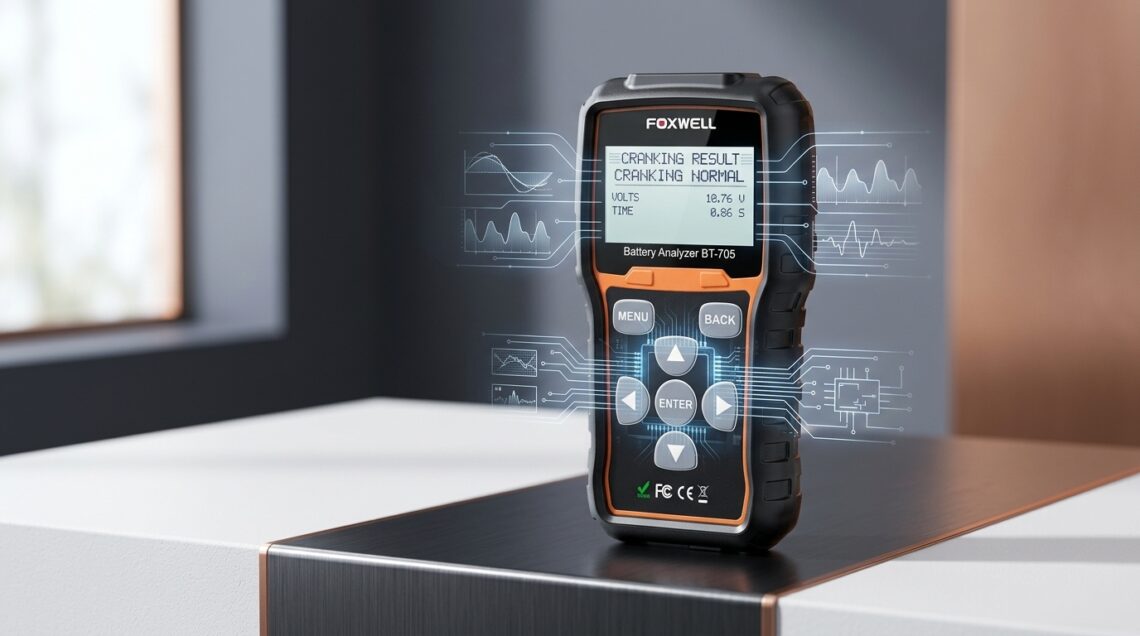
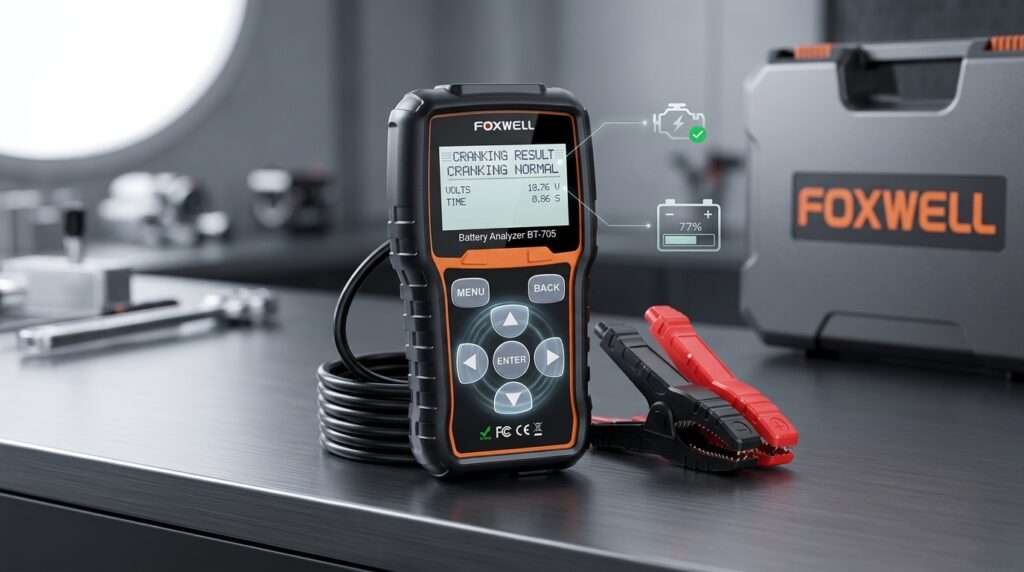
The FOXWELL BT705 is a digital battery and charging system analyzer built for both 12V and 24V electrical systems. It’s designed to evaluate the health of a vehicle’s battery, test the alternator’s output, and perform load testing — all from a single handheld unit. With a CCA (Cold Cranking Amps) range spanning from 100 to 2000, it’s built to accommodate a wide variety of vehicles, from compact passenger cars to heavy-duty trucks, RVs, and even marine craft like boats.
The device comes with a 5.9-foot cable, which gives users a comfortable reach when connecting to battery terminals in tighter engine bays or unconventional vehicle layouts.
Key Features Worth Knowing About
Wide CCA Range (100–2000 CCA)
One of the more notable aspects of the BT705 is its broad testing range. Cold Cranking Amps is a standard measurement used to rate a battery’s ability to start an engine in cold temperatures. A range that extends to 2000 CCA means this tester isn’t limited to small vehicles — it can handle the larger batteries found in commercial trucks, RVs, and boats without any compatibility issues.
Dual Voltage Support: 12V and 24V
Many battery testers on the market are built exclusively for 12V systems, which covers most personal vehicles. The BT705 goes a step further by also supporting 24V systems, which are common in larger commercial vehicles and certain heavy equipment. This dual compatibility makes it a more versatile option for people who work across different types of vehicles.
Cranking and Charging System Testing
Beyond simple battery analysis, the BT705 evaluates two other critical aspects of your vehicle’s electrical health:
- Cranking test: Assesses the battery’s performance when the engine is being started, helping identify whether weak cranking is due to a dying battery.
- Charging test: Checks the alternator’s output to confirm it’s properly recharging the battery while the engine runs.
Together, these three functions — battery health, cranking performance, and charging output — give a more complete picture of what’s happening in a vehicle’s electrical system.
Digital Display and High-Accuracy Readings
The BT705 uses a digital interface to present test results in a clear, readable format. Accuracy matters here because an imprecise reading could lead you to replace a perfectly functional battery or overlook one that’s actually failing. The device is designed to provide reliable measurements that you can act on with confidence.
Multi-Standard Battery Compatibility
The tester supports several common battery standards including CCA, CA (Cranking Amps), MCA (Marine Cranking Amps), DIN, IEC, EN, and JIS. This range of compatibility means it can be used with batteries manufactured to different international standards — a genuinely useful feature for anyone working with imported vehicles or marine applications.
5.9-Foot Cable Length
A nearly 6-foot cable gives users enough reach to comfortably clamp onto terminals without contorting around the engine bay. This is a small but practical detail that makes the testing process more manageable, especially in trucks or SUVs where the battery may be positioned in less accessible locations.
How the FOXWELL BT705 Can Be Used
Routine Home Vehicle Maintenance
One of the most practical uses for a tool like this is at-home vehicle maintenance. Instead of waiting until your car fails to start on a cold morning, you can periodically check your battery’s health to get a sense of when it might be approaching the end of its service life. Batteries typically last between three and five years, but driving habits, climate, and usage patterns can shorten or extend that window significantly.
Running a quick test every few months — or at the start of each season — can alert you to a weakening battery before it becomes a problem.
Pre-Purchase Vehicle Inspections
If you’re buying a used car, the battery and alternator are rarely high on the inspection checklist. But a failing battery that’s been jump-started before a test drive won’t reveal itself until later. Bringing along a tester like the BT705 to a private sale or even a dealership (where appropriate) can give you additional insight into the vehicle’s electrical health before you commit to a purchase.
Diagnosing Intermittent Starting Problems
Intermittent starting issues are notoriously difficult to diagnose because the vehicle often behaves normally by the time it reaches a mechanic. With a battery tester at hand, you can run diagnostics at home right when the issue occurs — capturing data that might otherwise be invisible at a repair shop.
Marine and RV Applications
The inclusion of MCA ratings and 24V system support makes the BT705 a natural fit for boat owners and RV enthusiasts. Marine batteries face unique stressors, including humidity, vibration, and extended periods of non-use during off-season months. Testing battery condition before setting out on a trip or after months in storage is a straightforward way to avoid unexpected failures away from home.
Light Professional Use
For a small garage, roadside assistance provider, or mobile mechanic, a tool like this covers the diagnostic basics without requiring a significant investment in equipment. It won’t replace a full-scale professional analyzer in a high-volume shop, but for lighter professional applications, it offers a solid range of capabilities.
Who Might Find This Tool Useful
- DIY mechanics and home garage enthusiasts who want a reliable way to monitor their vehicle’s battery health without taking it to a shop
- Truck and RV owners who deal with larger 24V or high-CCA battery systems that standard testers don’t support
- Boat owners who need MCA-compatible testing and want to verify battery readiness before trips
- Used car buyers looking for a quick way to assess electrical system health before a purchase
- Roadside assistance professionals who need a portable, multi-vehicle-compatible testing solution
Important Things to Consider
It Tests, It Doesn’t Fix
It’s worth being clear about what a battery tester does and doesn’t do. The BT705 identifies problems — it tells you whether your battery, alternator, or starting system is underperforming. Acting on that information, whether that means replacing a battery or visiting a mechanic, is still on you. The tester is a diagnostic tool, not a repair solution.
Interpreting Results Requires Some Baseline Knowledge
The device presents results clearly, but getting full value from those results means understanding what CCA ratings mean, what healthy alternator output looks like, and how to interpret cranking voltage. For users with no prior experience in vehicle electrical systems, there may be a short learning curve. That said, the BT705 is generally considered approachable compared to more complex professional-grade equipment.
It’s Designed for Lead-Acid Battery Chemistry
The BT705 is built to work with standard flooded, AGM, and gel lead-acid batteries. If you have a lithium-based vehicle battery — increasingly common in newer hybrid or electric-adjacent vehicles — this may not be the right tool. Always verify compatibility with your specific battery type before testing.
Cable Length Has Limits
While 5.9 feet is generous for most applications, some large trucks or vehicles with rear-mounted batteries may present more of a challenge. In those cases, you’d need to bring the tester closer to the battery location, which may require some repositioning.
Battery Testers: Understanding the General Categories
Not all battery testers work the same way. It helps to understand where a device like the BT705 sits within the broader landscape:
- Simple load testers apply a fixed load to the battery and measure how well it holds voltage. They’re affordable but less precise and don’t analyze the full charging system.
- Digital conductance testers (the category the BT705 falls into) measure the battery’s internal resistance to estimate its health and remaining capacity. They’re faster, safer, and don’t require the battery to be fully charged to produce a reading.
- Professional-grade shop analyzers offer advanced data logging, computer connectivity, and integration with repair databases. They’re far more expensive and better suited to high-volume professional environments.
For most home users and light professionals, a digital conductance tester strikes a practical balance between capability and cost.
Frequently Asked Questions
Can the BT705 test a battery that’s already dead?
A severely discharged battery may not provide enough voltage for the tester to get an accurate reading. It’s generally recommended to charge the battery to at least a partial charge before testing, or at minimum verify that there’s enough residual voltage for the device to work with.
Does it work on motorcycle batteries?
The BT705 is designed primarily for car, truck, RV, and marine applications. Motorcycle batteries typically have much lower CCA ratings and may fall below the tester’s effective range. It’s worth confirming compatibility before testing smaller batteries.
Is the device difficult to use?
For most users, the process is relatively simple: connect the clamps to the battery terminals, select the battery type and rating, and follow the on-screen prompts. Results are displayed in plain language, which makes interpretation more accessible even for beginners.
Can it identify a bad alternator?
Yes — the charging system test evaluates the alternator’s output voltage while the engine is running. If the alternator is overcharging, undercharging, or producing erratic output, the test should flag it.
Is a 5.9-foot cable long enough for trucks?
For most pickup trucks, yes. In vehicles with batteries mounted in unconventional locations (like under the rear seat or in the trunk), you may need to position yourself carefully or bring the unit closer to the battery.
Conclusion
Electrical problems are among the most common causes of vehicle breakdowns, and the battery and alternator are usually the first places to look. A digital testing tool like the FOXWELL BT705 offers a practical, accessible way to stay ahead of those issues — whether you’re maintaining a daily driver, preparing an RV for a long trip, or troubleshooting a boat that sat idle all winter.
It covers a thoughtful range of vehicle types, supports both 12V and 24V systems, and brings together battery, cranking, and charging diagnostics in one device. For anyone who wants more visibility into their vehicle’s electrical health without relying entirely on a mechanic’s assessment, it’s a tool worth learning more about.