If you’ve ever been stranded in a parking lot with a dead battery — no one nearby, no jumper cables, and a tight schedule — you understand the value of a good portable jump starter. These compact devices have quietly become one of the most practical pieces of emergency gear a driver can carry. The WOLFBOX MV24 4000A Jump Starter is one of the more feature-rich options currently available, and this article breaks down what it offers, who it’s designed for, and how to think about whether something like it belongs in your vehicle or garage kit.
What Is a Portable Jump Starter, and Why Does It Matter?
Before diving into the specifics of this unit, it helps to understand what portable jump starters actually do — and why they’ve largely replaced the old-fashioned need to flag someone down for a jump.
Traditional jump-starting requires another vehicle, compatible cables, and cooperation from a stranger. Portable jump starters eliminate all three of those variables. They’re self-contained battery packs capable of delivering enough current to start a car’s engine independently. Modern units have evolved considerably from the heavy lead-acid boxes of earlier years, now using lithium-ion battery technology that allows for a much smaller footprint while still delivering impressive peak amperage.
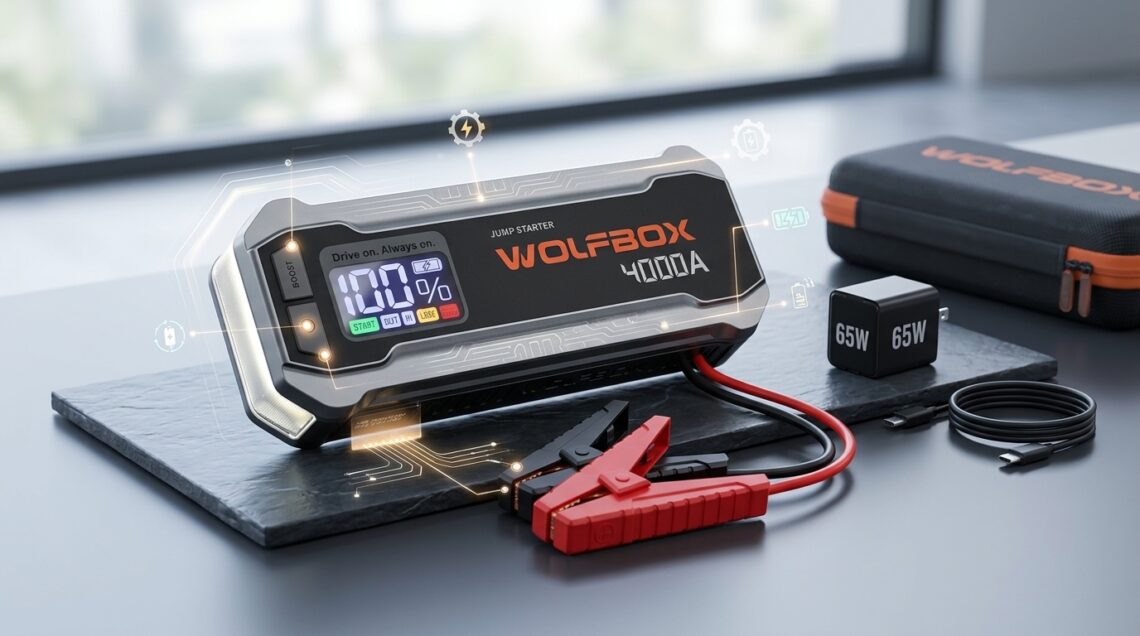
The WOLFBOX MV24 is positioned toward the higher end of consumer-grade units, offering a 4000A peak current rating and an 88.8Wh battery capacity — specs that place it in the range typically associated with larger vehicles like trucks, SUVs, and diesel-engine cars.
Key Features Worth Understanding
Peak Amperage: 4000A
The headline number — 4000A peak current — refers to the maximum burst of electrical current the unit can deliver during a jump-start attempt. This is a short-duration spike, not a sustained output, but it’s what actually turns the engine over during startup.
To put this in context, a small sedan with a gasoline engine might require somewhere around 400–600 cranking amps to start reliably in normal conditions. Trucks, larger SUVs, and diesel engines require substantially more. The MV24’s 4000A peak gives it considerable headroom for challenging starts, which matters most in cold weather (where battery and engine performance both degrade) or when dealing with an engine that hasn’t run in a while.
The unit is rated for engines up to 10L gasoline and 10L diesel — a range that covers essentially every consumer vehicle, most light-duty commercial trucks, and many recreational vehicles. That’s a broader compatibility envelope than many portable units in this category.
88.8Wh Battery Capacity
The 88.8Wh figure tells you how much total energy the battery stores. This affects how many jump attempts you can make on a single charge, as well as how useful the unit is for its secondary functions (more on that below). A higher Wh rating generally means more reserve capacity — useful when you’ve had to attempt multiple starts or when the device has been sitting unused for a while.
Lithium-ion packs at this capacity level are generally capable of holding a useful charge for several months of storage, though actual shelf life varies with storage temperature and conditions.
65W Quick Charging
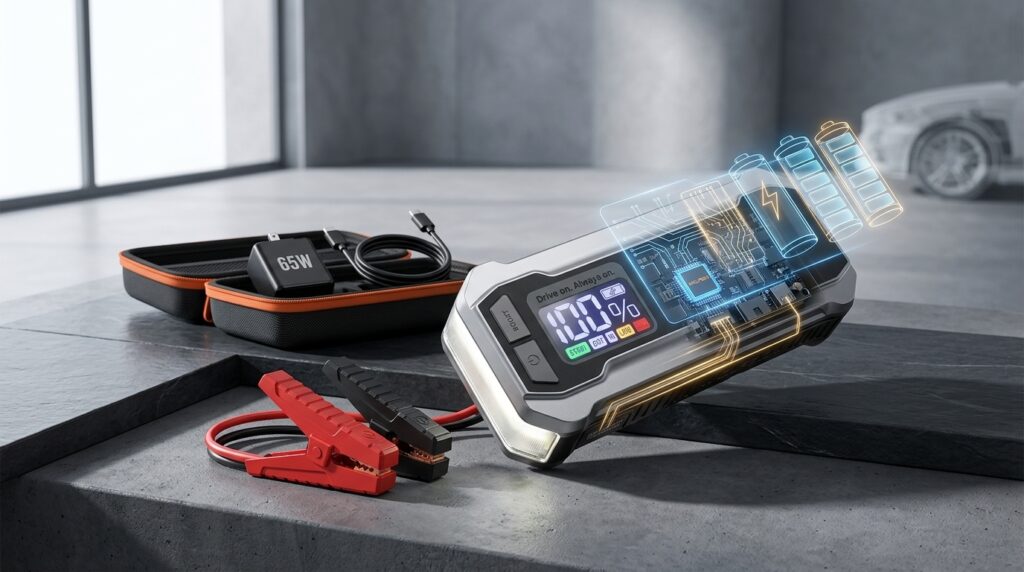
The MV24 includes a 65W fast-charging input port for recharging the jump starter itself. This is a meaningful convenience feature — waiting hours for a portable power unit to recharge after use defeats some of the purpose of having one. At 65W, the unit can accept a rapid top-up using a compatible USB-C power delivery charger.
It’s worth noting that 65W fast charging for the device itself is separate from what the jump starter can provide to other gadgets. Pay attention to both input and output specs when evaluating any jump starter.
USB-C Output and Multi-Device Charging
Beyond jump starting, this device includes output ports that allow it to function as a portable power bank. With 65W USB-C output capability, it can charge modern laptops, tablets, and smartphones at meaningful speeds — making it a potentially useful tool even when you’re nowhere near a dead battery.
This dual-purpose functionality has become standard on higher-end jump starters, and it serves a practical purpose: it gives you a reason to keep the device charged and nearby, rather than leaving it forgotten in a trunk until it’s needed.
LED Display
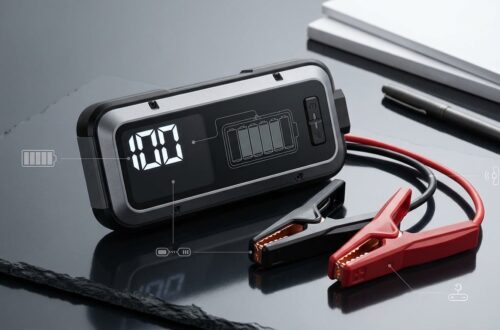
The unit features an LED display that shows the current battery level. This is more useful than it might seem. Without some form of charge indicator, it’s easy to grab a jump starter in an emergency only to find it at 5% from sitting discharged for months. A visible display encourages regular monitoring and recharging, and it gives you confidence about what you’re actually working with before attempting a jump.
Built-In LED Flashlight
A built-in LED light is included — practical for jump-starting in low-light conditions (parking garages, roadsides at night) and useful as a general emergency flashlight. Some users will find this more useful than others, but for an emergency kit, having a reliable light source in the same package as your jump starter makes sense.
Included Jumper Cables
The package includes dedicated jumper cables designed to work with the unit. These are shorter and less cumbersome than traditional full-length jumper cables, and they’re purpose-built with the clamps and connectors matched to the device. Having them bundled in means one less thing to purchase separately or forget to pack.
How This Type of Device Can Be Used
Emergency Vehicle Jump-Starts
The core use case is straightforward: connect the clamps to a dead battery (red to positive, black to negative, same as traditional jump cables), wait for the unit’s built-in safety circuit to verify the connection, then start the engine. Most quality jump starters include protection features that prevent incorrect connections from causing damage — the MV24 includes short-circuit, reverse polarity, and over-current protection.
This process typically takes less than a minute and requires no second vehicle. For families with older vehicles, people who park in areas where help is hard to find, or anyone who regularly deals with extreme cold, this kind of capability provides genuine peace of mind.
Starting Gasoline and Diesel Engines
The MV24’s compatibility with both gas and diesel engines up to 10L is worth highlighting because diesel engines are often more demanding to start. Diesel relies on compression ignition rather than a spark plug, which means cold-start attempts draw more power from the starter motor. Having a unit explicitly rated for large diesel engines makes it more broadly useful — relevant for diesel truck owners, RV owners, or boat operators with diesel inboard engines.
Charging Electronics
With 65W USB-C output, this device can serve as a travel power bank or emergency charger for:
- Laptops (most modern USB-C charging laptops accept 45–65W)
- Tablets and smartphones
- Portable speakers, GPS units, or cameras
For road trips or camping, the overlap between “jump starter” and “battery pack” means you’re carrying one fewer piece of gear.
Roadside Emergency Illumination
The built-in LED light provides hands-free (or hands-on) illumination for roadside work, whether that’s a jump start, a tire change, or just flagging down help in low-visibility conditions.
Who This Device May Be Suitable For
Owners of Larger Vehicles
Drivers of trucks, full-size SUVs, diesel vehicles, or older cars with aging batteries are perhaps the most natural audience for a high-amperage unit like this one. The 4000A peak rating provides more than enough headroom for challenging starts, and the engine size compatibility (10L gas, 10L diesel) covers virtually everything in consumer use.
People Who Frequently Travel Solo
Traveling alone means no second driver to provide a traditional jump. A portable jump starter removes that dependency entirely, which has real value whether you’re commuting through an unfamiliar city, taking road trips, or regularly driving in rural areas where roadside assistance response times can be lengthy.
Those Who Live in Cold Climates
Cold weather is one of the most common causes of battery failure. Low temperatures reduce a battery’s ability to deliver current precisely when the engine requires more current to start. Having a jump starter in your vehicle during winter months is particularly practical — and lithium-ion units should ideally be brought indoors when not in use in very cold conditions to preserve their performance.
Mechanics, Fleet Operators, and Small Businesses
Those who maintain multiple vehicles or work in automotive environments may find a high-amperage unit like this more cost-effective and faster to use than a traditional charger for quick-start situations. It doesn’t replace a proper battery charger for reconditioning a depleted battery, but for getting a vehicle moving quickly, it’s hard to match.
Outdoor Enthusiasts
Campers, off-roaders, and overland travelers who operate in areas without easy access to roadside assistance naturally benefit from carrying a capable jump starter. The included USB-C power bank functionality adds utility for keeping devices charged in the field.
Important Things to Consider Before Purchasing
Understanding Peak vs. Cranking Amps
Marketing materials for jump starters almost always lead with peak amperage, which is the maximum surge current the device can deliver for a very brief moment. What matters more for practical performance is the cranking amp rating (CA) or cold cranking amp rating (CCA), which reflect sustained performance under realistic starting conditions.
When evaluating any jump starter, try to look at both specs if available, rather than relying solely on the peak figure. A 4000A peak with a lower sustained output may perform differently in the field than the headline number suggests.
Battery Maintenance
Lithium-ion jump starters discharge slowly over time. A unit left in a hot car trunk through a summer or stored uncharged over a winter may not perform as expected when needed. Most manufacturers recommend charging the unit every 3–6 months when not in use, and storing it in a climate-controlled environment when possible.
It Doesn’t Replace a Battery Charger
A jump starter gets your engine running; it doesn’t fix a failing battery. If your battery is repeatedly dying, a jump start — whether from another vehicle or a portable pack — only delays addressing the underlying issue. A proper battery charger or maintainer, or eventually a battery replacement, is what the situation actually calls for.
Compatibility Verification
While this unit is rated for engines up to 10L, always verify compatibility with your specific vehicle before purchasing any jump starter. Certain older vehicles or specialty applications may have different requirements, and some EVs have jump-starting procedures that differ significantly from conventional vehicles.
Size and Portability Trade-offs
Higher capacity and higher peak amperage tend to mean a physically larger and heavier unit. The MV24 is a substantial device compared to slim “credit card” jump starters. That’s an appropriate trade-off for its rated capabilities, but it’s worth being realistic about where you’ll store it and whether the size works for your vehicle.
A Brief Look at Jump Starter Categories
Portable jump starters generally fall into a few broad categories, and understanding where the WOLFBOX MV24 sits helps contextualize it:
Compact Lithium Units (Under 1000A peak) These slim, lightweight devices are designed primarily for passenger cars and small engines. They’re easy to store in a glove box and are often inexpensive. They typically lack fast charging and high-amperage output, which limits them to smaller gasoline engines in good condition.
Mid-Range Units (1000–2500A peak) The most popular consumer category. Capable of handling most standard passenger vehicles and small trucks, these units balance portability and capability reasonably well. Many include USB outputs but fewer offer fast charging.
High-Capacity Units (3000A+ peak, like the MV24) Designed for larger engines, diesel vehicles, and demanding starting conditions. Larger form factor, higher battery capacity, and more advanced features like fast charging and multi-port outputs. More expensive, but significantly more versatile. These are the appropriate choice for truck owners, fleet use, diesel vehicles, and those who want genuine emergency preparedness capability.
The MV24 sits firmly in this third category — it’s not designed to be pocket-sized, but its combination of high peak amperage, fast charging, and multi-device output reflects its positioning as a comprehensive solution rather than a minimalist one.
Frequently Asked Questions
How many times can it start a vehicle on a single charge? This depends on the vehicle’s engine size, battery condition, and how depleted the jump starter is. Under normal conditions, a fully charged high-capacity unit like the MV24 should be capable of multiple jump attempts before needing a recharge. Exact numbers vary, so the best practice is to keep the unit charged.
Can it charge a laptop? Yes — the 65W USB-C output is compatible with most modern laptops that charge via USB-C. Check your laptop’s power requirements; most accept 45W or 65W, which falls within this unit’s output capability.
Is it safe to leave in a hot car? Extreme heat accelerates lithium battery degradation and can pose safety risks. It’s generally better to bring the device inside during extreme summer heat rather than leaving it in a parked vehicle for extended periods.
Does it work on diesel trucks? The MV24 is rated for diesel engines up to 10L, which covers most consumer diesel trucks and SUVs. For larger commercial diesel engines, verify specifications carefully.
How long does it take to recharge the jump starter? With a 65W input and a compatible charger, charge times are significantly reduced compared to older-generation units. Specific charge times will depend on how depleted the unit is.
Does it include protection against reverse polarity? Yes, the unit includes reverse polarity protection and other safety features (short-circuit protection, over-current protection) that help prevent damage from connection errors. That said, proper cable connection procedure should still be followed.
Can it be used on a motorcycle or ATV? Smaller engines like motorcycles and ATVs typically require far less cranking current than a car. A 4000A-rated unit can generally handle these applications easily, though some smaller units would be equally effective. The MV24 would likely be overkill for exclusive motorcycle use, but it works.
What does the LED display show? The display shows the current battery charge level of the jump starter itself, allowing you to know how much capacity remains before needing a recharge.
Closing Thoughts
Portable jump starters have come a long way from the heavy, bulky units that were the only alternative to a second vehicle a decade ago. The WOLFBOX MV24 represents the current generation of these devices — lithium-powered, fast-charging, multi-functional, and rated for demanding applications that earlier compact units couldn’t handle.
Whether it’s the right fit for you depends on your vehicle type, how often you drive in challenging conditions, and how much value you place on having a single device that handles both emergency starting and everyday device charging. For truck owners, diesel drivers, frequent solo travelers, or anyone who takes emergency preparedness seriously, the capability envelope this kind of unit offers is genuinely useful.
It won’t replace good battery maintenance habits, and it’s a heavier piece of kit than some alternatives — but for what it’s designed to do, the combination of high-amperage output, fast charging, and multi-device power in one package is a reasonable solution for a lot of drivers.