Introduction
A dead battery is one of those inconveniences that seems to happen at the worst possible moment. Whether you’re heading out for a critical appointment, stranded in unfamiliar territory, or dealing with an aging vehicle that occasionally needs a boost, having a reliable jump-starting solution makes a significant difference. Over the past decade, the jump starter market has evolved substantially, moving away from the bulky cables and heavy batteries of previous generations toward more compact, efficient lithium-based solutions.
The jump starter category has expanded considerably, with manufacturers developing specialized devices for different vehicle types and user needs. Some are designed for everyday sedans, while others target trucks, motorcycles, boats, and recreational vehicles. Understanding what distinguishes one portable jump starter from another helps you make an informed decision based on your specific circumstances.
This article explores the features, practical applications, and considerations surrounding modern lithium jump starters—particularly focusing on how these devices work, what makes them useful, and how to determine if one might be suitable for your situation. Rather than making claims about what’s “best,” we’ll examine the actual specifications and capabilities that matter when you need reliable starting power.
Understanding Portable Jump Starters and How They’ve Changed
Before diving into specific features, it’s worth understanding what makes modern jump starters fundamentally different from their predecessors. Traditional jump starters relied on lead-acid batteries similar to those in your vehicle, which meant they were heavy, required regular charging and maintenance, and could lose charge over months of storage.
Contemporary lithium-based jump starters use lithium-ion battery technology—the same type of technology powering smartphones and laptops. This shift has enabled manufacturers to create devices that maintain their charge for longer periods, deliver consistent power output, and weigh significantly less than comparable lead-acid alternatives.
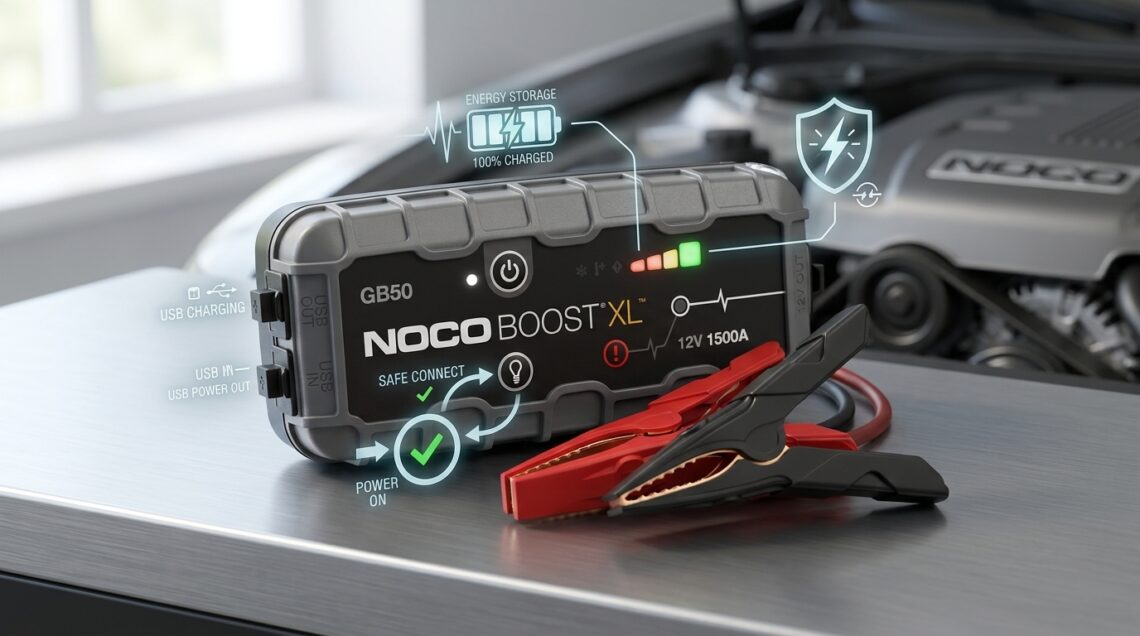
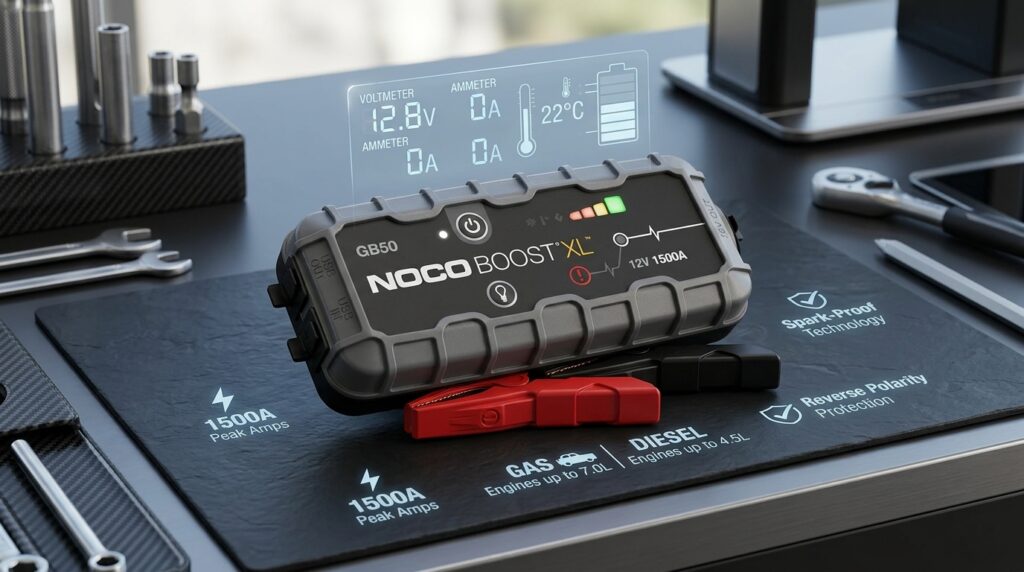
The capacity of a jump starter is typically measured in amperes (amps). Higher amperage ratings suggest the device can deliver more starting power, which becomes relevant when starting larger engines or engines in cold conditions. The NOCO Boost GB50, for instance, carries a 1500-amp rating, which falls into the mid-to-upper range of portable jump starters available today.
Key Features and Specifications
Understanding the technical aspects of a jump starter helps explain why certain features matter in real-world scenarios.
Amperage and Starting Power
The 1500-amp rating indicates the maximum amount of starting current the device can deliver. To put this in perspective, typical passenger vehicles require between 300 and 600 amps to start under normal conditions, while large trucks and diesel engines might need 800 amps or more. The 1500-amp capacity provides sufficient power for a wide range of vehicles, though it’s worth noting that the actual amperage delivered depends on several factors including battery condition, temperature, and the device’s internal design.
Lithium Battery Chemistry
Lithium-ion batteries behave differently than lead-acid alternatives. They maintain their output voltage more consistently as they discharge, meaning a lithium jump starter delivers nearly the same starting power whether it’s freshly charged or partially depleted. Lead-acid batteries, by contrast, show voltage drop-off as their charge decreases, which can limit their effectiveness when multiple starts are needed.
Lithium batteries also handle cold weather differently. While any battery loses efficiency in cold conditions, lithium maintains more consistent performance than lead-acid. This characteristic becomes particularly relevant in northern climates or for vehicles regularly exposed to freezing temperatures.
Safety Features and Protection Systems
Modern jump starters incorporate multiple protective mechanisms that operate automatically. Spark-proof technology prevents the formation of dangerous sparks during connection, which matters because battery terminals can create dangerous sparks if connected improperly—particularly important in situations involving fuel vapors or flammable materials nearby.
Reverse polarity protection represents another crucial safety feature. This technology prevents damage to both the jump starter and the vehicle’s electrical system if someone accidentally connects the cables with reversed polarity (positive to negative and vice versa). Rather than requiring careful, perfect connection, the device simply won’t function if connected backward, eliminating user error.
Additional protective systems typically include safeguards against overcharging, overheating, short-circuit conditions, and overcurrent situations. These layers of protection extend the device’s lifespan and reduce the risk of electrical fires or system damage.
Compatibility Across Vehicle Types
The specification stating compatibility with vehicles up to 7.0-liter gasoline and 4.5-liter diesel engines tells you something important about the device’s application range. Most passenger vehicles fall well within these parameters. A 7.0-liter capacity represents quite a large engine—many full-size pickup trucks and larger SUVs feature engines in the 5.0 to 6.5-liter range. The diesel specification of 4.5 liters also covers most truck-based diesel engines, though some heavy-duty diesel pickups exceed this capacity.
The mention of motorcycles, ATVs, boats, and RVs indicates a versatile device capable of functioning across different electrical systems. Motorcycles and ATVs present unique challenges because they often have smaller battery systems, making a device that can scale down its output particularly valuable.
Form Factor and Portability
Weight and size significantly impact the practicality of a portable jump starter. Devices that pack high amperage into a relatively compact, lightweight package offer clear advantages for storage, portability, and everyday accessibility. A jump starter that you’re actually willing to keep in your vehicle or take on trips proves more valuable than a more powerful option left at home.
How Portable Jump Starters Work
Understanding the basic operating principles clarifies why certain devices are better suited for different situations.
When you connect a jump starter to your vehicle’s battery, you’re creating an electrical path that allows the stored energy in the jump starter’s battery to flow into your vehicle’s battery. This incoming current helps return your vehicle’s battery voltage to a level sufficient for the starter motor and ignition system to function. The jump starter doesn’t actually start your engine—your engine’s electrical system does. The jump starter simply provides the boost necessary to make that process possible.
Temperature plays a significant role in jump starter effectiveness. Cold temperatures increase engine oil viscosity (making it thicker and harder to move through the engine), reduce battery chemical reaction rates, and increase the electrical resistance in circuits. Consequently, a vehicle requiring 400 amps to start on a warm day might need 800 amps in freezing conditions. This dynamic explains why amperage ratings matter more in cold climates.
The internal design of a jump starter determines how it maintains output voltage under load. Better-engineered devices use circuit designs that reduce internal resistance and maintain more stable voltage delivery throughout the starting process. This technical consideration affects whether the device can reliably start challenging situations or only works under ideal conditions.
Practical Applications and Use Cases
Different vehicle owners face different starting challenges, and understanding your particular situation helps determine whether a portable jump starter represents a valuable addition to your equipment.
Aging Vehicle Owners
Vehicles with aging batteries or aging electrical systems benefit from having a jump starter on hand. A battery that’s becoming unreliable might start your vehicle most of the time, but periodically falls short—particularly in cold weather or when the vehicle hasn’t been used for several days. Rather than waiting for a tow truck or troubling neighbors, a portable jump starter enables you to get moving again quickly.
Rural and Distant Property Owners
People with property far from convenient roadside assistance benefit from portable jump starters. Whether you’re traveling to a remote cabin, checking on property miles from town, or exploring rural roads, carrying a reliable jump starter significantly reduces the anxiety associated with vehicle troubles. The self-contained nature of a portable device means you’re not dependent on finding another vehicle to help or waiting for professional assistance.
Drivers of Multiple Vehicles
Households with multiple vehicles experience different issues across the fleet. Perhaps your primary vehicle is reliable, but your older truck, recreational vehicle, or second car needs occasional boosts. A jump starter allows any family member to handle starting issues independently without coordinating access to another vehicle.
Recreational Vehicle and Boat Owners
RV and boat owners operate in situations where conventional roadside assistance becomes complicated. Your boat might be moored far from power sources, or your RV might be at a campground where neighboring vehicles can’t easily help. The ability to self-recover from electrical issues becomes genuinely valuable in these contexts.
Professional and Commercial Users
Contractors, delivery personnel, fleet operators, and others who rely on vehicles for their livelihood benefit from portable jump starters. A device kept in the vehicle reduces downtime and keeps operations moving even when an unexpected starting issue occurs.
Who Might Find This Device Suitable
Identifying whether a particular jump starter fits your needs requires honest assessment of your situation, vehicle, and likely usage patterns.
A device with this specification set appeals to several categories of users:
Vehicle owners with standard to large engines who need proven starting capability across various conditions would find the 1500-amp capacity relevant. This covers people driving pickup trucks, large SUVs, older vehicles, and diesel-powered vehicles.
People who travel frequently and want reliable backup power appreciate portable jump starters they can keep in their vehicle permanently. The self-contained nature means no coordination with other drivers is necessary.
Users concerned about convenience and independence might prefer handling starting issues themselves rather than waiting for roadside assistance. This appeals to people who value self-reliance or who live in areas where assistance response times are longer.
Owners of multiple vehicle types who need a single solution across cars, trucks, motorcycles, ATVs, and other equipment find versatile devices particularly valuable. Rather than maintaining multiple specialized tools, one capable device serves various needs.
People with storage space limitations who still want jump-starting capability appreciate compact devices that don’t occupy excessive storage space in garages, vehicles, or tool bags.
Important Considerations and Limitations
Honest assessment requires acknowledging what portable jump starters can’t do and what limitations apply.
Battery Condition Matters
A portable jump starter provides temporary power that allows an engine to start. It doesn’t repair underlying battery or electrical problems. If your battery is dying because the alternator isn’t charging properly, the jump starter helps you start the vehicle, but the underlying issue remains. Professional diagnosis becomes necessary to identify whether you’re dealing with a bad battery, a failing alternator, or some other electrical fault.
Cold Weather Challenges
While lithium jump starters perform better in cold weather than lead-acid alternatives, they don’t completely overcome cold’s effects. In severely cold conditions (below -20 degrees Fahrenheit), battery chemistry becomes less responsive, and engine starting becomes harder regardless of the jump starter’s quality. Extreme cold remains a challenging scenario for any portable power solution.
Storage and Maintenance
Lithium batteries eventually deplete, even when not in use. Most sources recommend periodic recharging even when the device hasn’t been actively used, as battery chemistry slowly discharges over months. A jump starter in storage should be recharged periodically to ensure readiness when needed. Understanding your device’s charging requirements prevents arriving at a critical moment only to discover the jump starter itself is dead.
Physical Connection Issues
A successful jump start requires good electrical contact between cables and battery terminals. Corrosion on terminals, damaged cable connectors, or worn battery posts can prevent proper connection. Sometimes the issue preventing a start isn’t insufficient power but poor electrical connection. Keeping battery terminals clean and connectors in good condition supports reliable jump-starting.
Not a Replacement for Maintenance
Jump starters solve immediate problems but shouldn’t replace regular vehicle maintenance. A battery that requires jump starts multiple times per season indicates an underlying issue requiring professional attention. Similarly, alternator problems, parasitic battery drains, and other electrical faults need proper diagnosis and repair.
Understanding the Jump Starter Category
The jump starter market encompasses a broad range of products with significant capability variations. Understanding where different products fit within the category helps explain feature differences and price points.
Micro Jump Starters
At the lower end of the market, ultra-compact jump starters with 300-400 amp capacity serve motorcycle and small vehicle owners. These pocket-sized devices prioritize extreme portability over raw power.
Compact Portable Jump Starters
Mid-range portable units, typically offering 500-1000 amps, balance capability and size. These suit most passenger vehicle owners and represent the most common category for everyday drivers.
Full-Capacity Professional Jump Starters
Larger units delivering 1000+ amps address demanding applications including large trucks, diesel engines, cold-start situations, and professional/commercial use. These devices prioritize raw starting power at the expense of size and weight.
Integrated Jump Starter Power Packs
Some units combine jump-starting capability with additional features like USB charging, LED flashlights, air compressors, or wireless charging. These multi-function devices appeal to users wanting consolidated equipment.
The distinction matters because the 1500-amp rating places this particular device in the upper range of compact portable solutions—offering substantial starting power in a form factor that remains genuinely portable and storable in a vehicle.
Comparison of Portable Jump Starter Approaches
Different manufacturers employ varying design philosophies when approaching jump starter development.
Some companies prioritize maximum amperage and raw power delivery, often resulting in larger, heavier devices. Their philosophy assumes more power is universally better, even if it requires more storage space or greater weight.
Others emphasize extreme portability and compact form factors, accepting lower amperage ratings to achieve pocket-sized devices. This approach prioritizes accessibility and always-having-it-with-you convenience.
A third approach balances these considerations, targeting the “sweet spot” where devices deliver substantial starting power without becoming unwieldy or difficult to store. Products falling into this category typically aim at mid-range amperage with thoughtful engineering that maximizes practical capability.
Different manufacturers also vary in their approach to safety features, user interface design, included accessories, and warranty provisions. Comparing devices across these dimensions often reveals more meaningful differences than amperage ratings alone.
Frequently Asked Questions
How often does a jump starter need charging?
Lithium batteries self-discharge slowly even when not in use. Most manufacturers recommend recharging every 3-6 months even when the device hasn’t been actively used. Treating it like a fire extinguisher—checking periodically and recharging on schedule—keeps it ready for unexpected situations.
Can I use a jump starter on a completely dead battery?
A completely dead battery presents a different situation than a merely discharged battery. If your battery is so dead that it has no voltage whatsoever, jump-starting becomes impossible because there must be some electrical circuit for power to flow through. However, most automotive batteries never fully discharge to absolute zero voltage. Even batteries that seem completely dead typically retain several volts. Devices with effective internal design can often work with even very low voltage batteries. If the battery has been dead for an extended time (weeks or months), professional charging might be necessary.
Does cold weather affect jump starter performance?
Yes, but lithium jump starters handle cold better than lead-acid alternatives. Cold reduces chemical reaction rates in any battery, decreasing available amperage and voltage. Severe cold (below -20 degrees Fahrenheit) significantly impacts any portable power solution. Keeping the jump starter indoors when not in use and bringing it outside only when needed helps maintain optimal performance in cold climates.
Can I damage my vehicle using a jump starter?
Modern jump starters with reverse polarity protection and spark-proof technology make accidental damage unlikely. The primary user error that mattered with older jump starters—reversed cable polarity—is essentially eliminated. However, proper connection remains important. Following the included instructions and connecting to the actual battery terminals (rather than other metal points nearby) ensures safe operation.
What’s the difference between a jump starter and a portable power bank?
These represent different purposes. Portable power banks provide USB power for charging phones, tablets, and other small devices. Jump starters deliver the high current needed for engine starting. While some devices combine both functions, a standard power bank cannot start a vehicle, and a jump starter shouldn’t be used as a primary phone charger.
How many times can a jump starter start a vehicle before needing to recharge?
This depends on multiple factors including battery capacity, the starting requirement of the vehicle, the device’s discharge characteristics, and ambient temperature. Most portable jump starters can reliably handle multiple start attempts on a single charge. A device rated at 1500 amps might successfully start a typical vehicle 10-20 times before requiring a full recharge, though actual capability varies based on conditions.
Is a jump starter safe to keep in a vehicle?
Yes. Modern jump starters are designed to be safely stored in vehicles for extended periods. They don’t require special conditions, won’t leak corrosive fluid, and are built to tolerate temperature variations. Keeping one in your vehicle’s storage compartment means it’s always available when needed.
Can jump starters be used on motorcycles and ATVs?
Motorcycles, ATVs, and similar vehicles present different electrical architectures than cars, with smaller battery systems and different power requirements. Devices specifically designed for multi-vehicle application typically include safety features preventing damage to smaller electrical systems. Using a jump starter not designed for smaller vehicles can damage their delicate electronics.
What warranty considerations should I evaluate?
Manufacturer warranties vary considerably. Some provide one-year limited warranties covering defects, while others offer longer coverage. Understanding warranty terms helps identify which manufacturers stand behind their products and what recourse exists if failures occur.
Conclusion
Portable jump starters represent practical additions to vehicle emergency equipment, particularly for people dealing with aging vehicles, frequent travel, remote property access, or multiple vehicles. The jump starter category has evolved significantly, with modern lithium-based devices offering distinct advantages over previous generations through longer storage life, consistent output, improved cold-weather performance, and enhanced safety features.
The capacity and specifications of a jump starter should match your likely needs and vehicle characteristics. A device specified for starting vehicles up to 7.0-liter gasoline and 4.5-liter diesel engines covers the vast majority of standard passenger vehicles, pickup trucks, SUVs, and recreational vehicles. The inclusion of compatibility with motorcycles, ATVs, and boats indicates versatility across different vehicle types.
However, jump starters aren’t solutions to underlying electrical problems, and they don’t replace regular vehicle maintenance. They solve immediate starting issues and provide peace of mind when traveling or using older vehicles, but professional diagnosis becomes necessary when battery or electrical problems become chronic.
Whether a portable jump starter makes sense for your situation depends on your vehicle type, how often you travel, and your comfort level with addressing vehicle issues independently. For many vehicle owners—particularly those driving multiple vehicles, traveling frequently, or maintaining older vehicles—having a capable, reliable jump starter accessible in the vehicle provides genuine practical value.